Sustainability is most credible when an interior design company in Hong Kong can explain measurable decisions instead of relying on a green-looking mood board. Material quantities, longevity, serviceability and operating requirements are practical starting points for homes and businesses where replacement work can be disruptive.
Evaluate durability, sourcing, repairability, indoor air quality and lifecycle value in interior design decisions.
Keep usable materials where appropriate
Review the current floor, doors, furniture and fixtures before stripping everything out. Where safety and condition allow, retention reduces the demand for new materials and disposal. Document which components can be refurbished, relocated or reused. The decision should consider maintenance and future flexibility, not just the immediate appearance.
Read product documentation carefully
Ask for technical performance, maintenance data and credible emissions or sourcing evidence when relevant. Terms such as eco, natural and recyclable mean different things and do not guarantee fitness for use. In humid or high-traffic interiors, repairability and cleanability may matter more than a short marketing statement.
Coordinate comfort with building systems
Daylight, glare control, appropriate ventilation and efficient lighting scenes influence the experience of a space. Designers need input from building-services specialists for mechanical or controls work. A visually open plan does not automatically provide acoustic comfort or appropriate air movement; test the actual activities and constraints.
Measure decisions over useful life
Compare products by expected maintenance, availability of replacement parts and potential refurbishment. Modular joinery and replaceable panels can prolong use, especially in commercial spaces that rebrand. Record selected products and care instructions so operational teams can maintain the design without discarding entire installations.
Example: a practical project decision
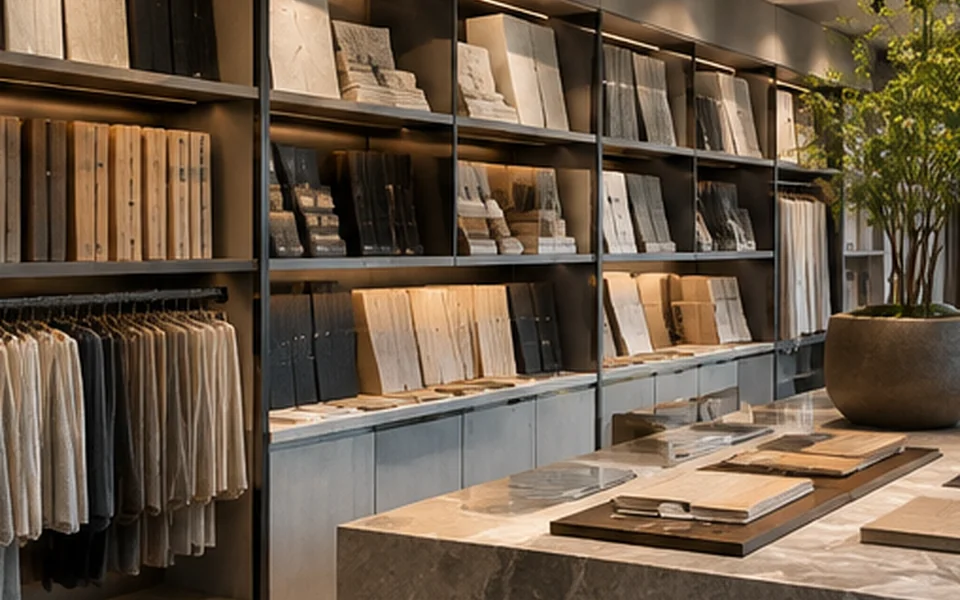
A retailer considers replacing a sound timber display system to match a new campaign. Refinishable panels and updated lighting provide the desired effect while retaining durable components.
Putting this into practice
At the next review, ask the project team to inspect reusable existing components. The following discussion should address how to ask for relevant material and emissions data. Document the assumptions, responsible people and any unresolved questions before approving drawings or supplier orders. Before the next commitment, consider cleaning, repair and spare parts and coordinate performance with qualified specialists. Where building management instructions, technical submissions or specialist work are involved, seek the advice of properly qualified parties. A useful decision record explains not only what was chosen but why, with any effect on budget, maintenance, user comfort or construction programme clearly stated.
A short decision checklist
- Inspect reusable existing components
- Ask for relevant material and emissions data
- Consider cleaning, repair and spare parts
- Coordinate performance with qualified specialists
Frequently asked questions
Does natural material always mean sustainable?
No. Durability, sourcing, treatments, transport and replacement cycles all affect the decision.
Is sustainable design limited to materials?
No. Space efficiency, adaptability, systems, operations and maintenance also matter.